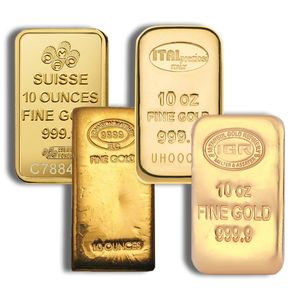
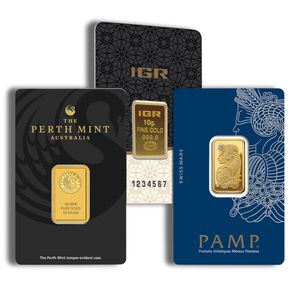
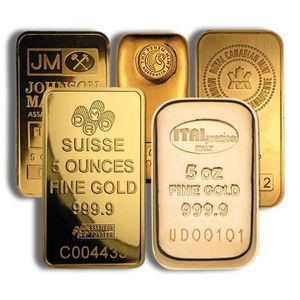
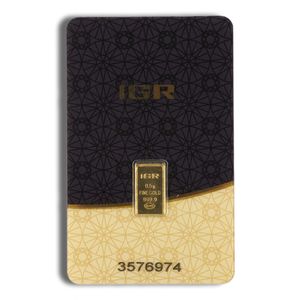
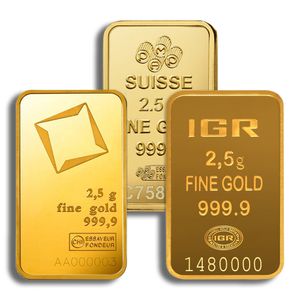
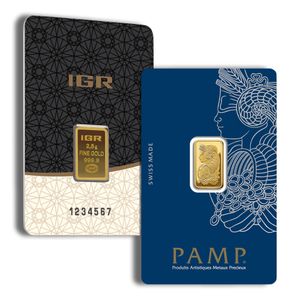
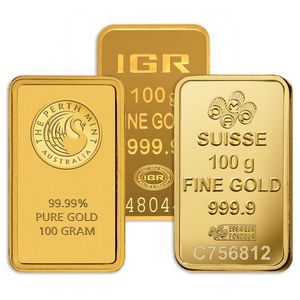
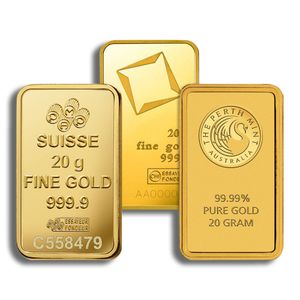
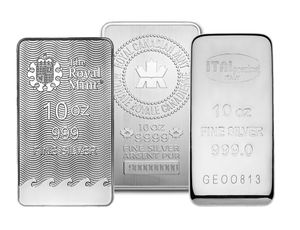
Overview of 1 Oz Gold Bar .9999 A 1 oz gold bar at .9999 fine purity represents one of the most widely recognized formats in the physical gold market. Carrying four nines fine gold content, these bars conform to the same purity standard used by major global refineries and are broadly accepted across dealer networks, wholesale markets, and private transactions. Because these come from various manufacturers rather than a single refinery, exact appearances differ, but the underlying metal specifications remain consistent across the category. We carry these bars in assay card format, meaning each piece arrives sealed within a tamper-evident card that certifies its weight and purity. The assay card functions as a form of authentication that accompanies the bar from the point of manufacture, making it straightforward to confirm the piece has not been altered or handled outside its original packaging. History and Background The modern gold bar in its current standardized form emerged alongside the development of organized commodity markets and institutional gold trading in the twentieth century. Refineries across Europe, North America, and Asia began producing smaller, consumer-grade bars
…
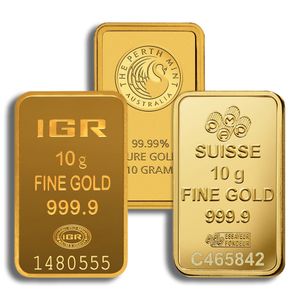
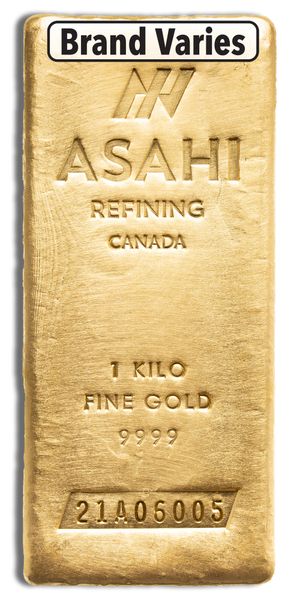
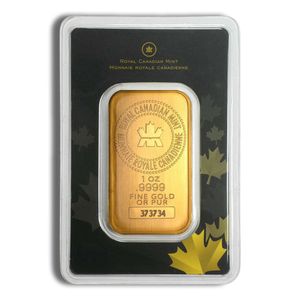
Overview of 1 Oz Gold Bar .9999 A 1 oz gold bar at .9999 fine purity represents one of the most widely recognized formats in the physical gold market. Carrying four nines fine gold content, these bars conform to the same purity standard used by major global refineries and are broadly accepted across dealer networks, wholesale markets, and private transactions. Because these come from various manufacturers rather than a single refinery, exact appearances differ, but the underlying metal specifications remain consistent across the category. We carry these bars in assay card format, meaning each piece arrives sealed within a tamper-evident card that certifies its weight and purity. The assay card functions as a form of authentication that accompanies the bar from the point of manufacture, making it straightforward to confirm the piece has not been altered or handled outside its original packaging. History and Background The modern gold bar in its current standardized form emerged alongside the development of organized commodity markets and institutional gold trading in the twentieth century. Refineries across Europe, North America, and Asia began producing smaller, consumer-grade bars as the gold market expanded beyond central banks and institutional trading desks. The one-ounce format became particularly prominent following the relaxation of private gold ownership laws in the United States during the 1970s, which opened the market to retail buyers seeking a compact, affordable entry point into physical gold. The .9999 purity standard gained traction as refining technology improved and as buyers grew more sophisticated in their understanding of metal content. This four nines specification is now the predominant standard for newly manufactured gold bars and is required by many modern sovereign mints for their flagship bullion products. The result is a market where .9999 fine bars from multiple refineries trade interchangeably based on weight rather than brand loyalty. Because these bars originate from various manufacturers, the category encompasses output from multiple refineries operating around the world. Some are household names in the gold industry; others are smaller operations whose output meets the same technical standards but commands less of a premium. The "random brand" format reflects how these products are commonly distributed through wholesale channels, where consistent purity and format matter more than refinery identity. Design and Aesthetics Gold bars in this category share a broadly similar visual grammar even across different manufacturers. Most feature a rectangular form with clean beveled edges, a polished or brushed surface finish, and stamped or engraved text identifying the bar's weight, purity, and the refinery's name or logo. The level of visual detail varies by manufacturer, with some bars carrying detailed engravings and others presenting a more minimal, utilitarian appearance. The assay card itself adds a secondary visual layer. Cards typically display the refinery's branding, a barcode or serial number for the individual bar, and printed specifications confirming the metal content. Some assay cards incorporate security holograms or specialty printing designed to make tampering or reproduction visibly apparent. Because brand varies, the specific artwork, color scheme, and card design will differ from one piece to the next. Authenticity and Product Integrity The assay card format provides a baseline level of authentication that distinguishes these bars from unpackaged secondary-market pieces. Each sealed card is produced at the time of manufacture and incorporates security elements that make it difficult to counterfeit or reseal without leaving visible evidence. A card that appears intact and undamaged is a meaningful indicator that the bar has not been substituted or modified since leaving the refinery. Beyond the assay packaging, every bar we handle is verified against standard weight and purity specifications before it reaches a customer. Our sourcing draws from established wholesale networks that deal in standard bullion formats, and products with obvious signs of tampering or packaging compromise are not offered for sale. We maintain authorized dealer relationships with both PCGS and NGC, and our membership in the American Numismatic Association and the National Coin and Bullion Association reflects our commitment to operating within recognized industry standards. Condition and Packaging These bars ship in their original sealed assay cards, which serve as both protective packaging and authentication. As long as the assay card remains intact and sealed, the bar is considered to be in original, unaltered condition. Opening the assay card is not recommended, as doing so removes the tamper-evidence element and may affect resale value in some markets. For orders of individual bars, the piece ships within protective outer packaging that keeps the assay card secure during transit. Larger quantity orders are typically fulfilled using standard bulk fulfillment appropriate to the product format. Because these bars come from various manufacturers, exact tube or box configurations may differ depending on the brand allocated at the time of shipment. As with any bar product that may be sourced from secondary market channels, it is worth noting that minor contact marks, light surface toning, or handling signs can occasionally be visible through the assay card window. These cosmetic characteristics do not affect the metal content, purity, or fundamental value of the bar itself. Pricing and Market Factors Pricing for these bars is calculated directly from the current spot price of gold plus a premium that reflects production costs, packaging, distribution, and market demand. The .9999 purity standard and one-ounce weight place them in direct competition with a wide range of globally produced bars, which tends to keep premiums relatively contained compared to sovereign coins or limited-production collectibles. Because the brand varies, buyers should expect that the premium reflects the category rather than any single refinery's reputation. In practical terms, this means the acquisition cost is typically lower than a branded bar from a well-known refinery such as PAMP Suisse or Valcambi, making the random brand format an efficient option for buyers whose priority is gold content over refinery prestige. Our pricing reflects real-time market conditions and is structured to give buyers a clear picture of what they are paying relative to spot. Selling and Liquidity One-ounce .9999 fine gold bars are among the most liquid formats in the physical gold market. The standardized weight and purity are universally understood by dealers, refineries, and private buyers, making these bars straightforward to sell across a wide range of channels. The assay card adds a layer of marketability by providing built-in authentication that many buyers in the secondary market prefer. We operate a two-way market that supports both purchases and sales within the same platform. Buyers who later decide to sell have access to competitive buyback pricing rather than being forced to seek out third-party buyers on their own. Understanding the resale side of the transaction before purchasing is part of how we approach the market, and the bid/ask spread displayed on our product pages reflects that transparency. Why Buy 1 Oz Gold Bar .9999? The primary appeal of a random brand 1 oz .9999 fine gold bar is straightforward: it delivers maximum metal content at the lowest typical premium within the one-ounce gold bar category. For buyers who want full-ounce gold exposure without paying a significant premium for a specific brand name, this format provides an efficient path to ownership. The assay card format retains the authentication benefits of original packaging, which matters when it comes time to resell. The one-ounce format is also practical from a handling standpoint. It is compact enough to store efficiently but substantial enough that each piece represents meaningful metal content. For buyers accumulating gold by weight rather than by brand, these bars are a logical and cost-conscious choice within the broader catalog. Why Buy from Bullion Standard? We built our platform around the principle that buyers deserve complete transparency across every part of the transaction, including the premium they pay, the liquidity available when they decide to sell, and the market conditions that influence both. Our pricing reflects live spot rates, and the bid/ask spread on every product page is designed to give buyers a realistic picture of the full transaction rather than just the purchase price. Every product we sell is verified for authenticity, weight, and purity. Our A rating with the Better Business Bureau, membership in the ANA and NCBA, and authorized dealer status with PCGS and NGC are not marketing claims but operational commitments that shape how we source, handle, and stand behind every item we sell. From secure checkout to reliable fulfillment and responsive support, the experience is designed to reward informed buyers who want a straightforward, trustworthy marketplace. Get Near-Spot Pricing with Bullion Standard Pro Bullion Standard Pro gives members access to live, executable wholesale bid and ask pricing on gold bars and across our broader catalog. Rather than working from static retail pricing, Pro members see real-time wholesale market conditions that reflect current supply, demand, and liquidity as they actually exist at the time of the transaction. For buyers focused on acquiring gold efficiently, the ability to transact at or near wholesale pricing makes a meaningful difference in the total cost of ownership. Pro also includes real-time portfolio valuation based on live wholesale bid pricing, which gives members a current liquidation-oriented view of their holdings rather than an estimated retail figure. Combined with proprietary analytics covering premiums, bid/ask spreads, and historical market data, Pro provides the kind of market visibility that allows buyers to evaluate products with the same depth of information typically reserved for institutional participants. Flexible and Secure Payment Options We support a broad range of payment methods to keep the buying process accessible and secure regardless of how you prefer to transact. Accepted options include Visa, Mastercard, American Express, Discover, PayPal, bank-connected payments through Plaid, wire transfer, paper check, and cryptocurrency payments processed through BitPay. Each payment method is integrated into a secure checkout environment designed to protect your transaction and personal information at every step. Whether you are purchasing a single bar or building a larger position, the flexibility to choose your preferred payment method is part of making the experience as straightforward as possible.
1 Oz Gold Bar .9999 - Random Brand (In Assay Card)
Volume Discount Pricing
Orders paid by debit card, credit card, and PayPal are an item's full
list
price
and receive no discount. Orders paid by cryptocurrency receive a 3%
discount
from an item's full list price. Orders paid by eCheck (ACH), paper
check,
and
bank wire receive a 4% discount from an item's full list price.
In Stock
Ships within 1 business day of cleared payment
Select Your Quantity
For Non-Members:
Free shipping on orders
$497+
.
PRO
Pro Member Delivery:
$23.97 flat-rate, true
wholesale pricing. Free shipping on orders
$10,000+.
Product ID: BST-000001CE9B
Specifications
Precious Metal Type
Gold
Format
Bar (Minted)
Brand/Mint
Various
Purity
0.9999
Weight
1 oz
Product Details
Overview of 1 Oz Gold Bar .9999 A 1 oz gold bar at .9999 fine purity represents one of the most widely recognized formats in the physical gold market. Carrying four nines fine gold content, these bars conform to the same purity standard used by major global refineries and are broadly accepted across dealer networks, wholesale markets, and private transactions. Because these come from various manufacturers rather than a single refinery, exact appearances differ, but the underlying metal specifications remain consistent across the category. We carry these bars in assay card format, meaning each piece arrives sealed within a tamper-evident card that certifies its weight and purity. The assay card functions as a form of authentication that accompanies the bar from the point of manufacture, making it straightforward to confirm the piece has not been altered or handled outside its original packaging. History and Background The modern gold bar in its current standardized form emerged alongside the development of organized commodity markets and institutional gold trading in the twentieth century. Refineries across Europe, North America, and Asia began producing smaller, consumer-grade bars
…
Overview of 1 Oz Gold Bar .9999 A 1 oz gold bar at .9999 fine purity represents one of the most widely recognized formats in the physical gold market. Carrying four nines fine gold content, these bars conform to the same purity standard used by major global refineries and are broadly accepted across dealer networks, wholesale markets, and private transactions. Because these come from various manufacturers rather than a single refinery, exact appearances differ, but the underlying metal specifications remain consistent across the category. We carry these bars in assay card format, meaning each piece arrives sealed within a tamper-evident card that certifies its weight and purity. The assay card functions as a form of authentication that accompanies the bar from the point of manufacture, making it straightforward to confirm the piece has not been altered or handled outside its original packaging. History and Background The modern gold bar in its current standardized form emerged alongside the development of organized commodity markets and institutional gold trading in the twentieth century. Refineries across Europe, North America, and Asia began producing smaller, consumer-grade bars as the gold market expanded beyond central banks and institutional trading desks. The one-ounce format became particularly prominent following the relaxation of private gold ownership laws in the United States during the 1970s, which opened the market to retail buyers seeking a compact, affordable entry point into physical gold. The .9999 purity standard gained traction as refining technology improved and as buyers grew more sophisticated in their understanding of metal content. This four nines specification is now the predominant standard for newly manufactured gold bars and is required by many modern sovereign mints for their flagship bullion products. The result is a market where .9999 fine bars from multiple refineries trade interchangeably based on weight rather than brand loyalty. Because these bars originate from various manufacturers, the category encompasses output from multiple refineries operating around the world. Some are household names in the gold industry; others are smaller operations whose output meets the same technical standards but commands less of a premium. The "random brand" format reflects how these products are commonly distributed through wholesale channels, where consistent purity and format matter more than refinery identity. Design and Aesthetics Gold bars in this category share a broadly similar visual grammar even across different manufacturers. Most feature a rectangular form with clean beveled edges, a polished or brushed surface finish, and stamped or engraved text identifying the bar's weight, purity, and the refinery's name or logo. The level of visual detail varies by manufacturer, with some bars carrying detailed engravings and others presenting a more minimal, utilitarian appearance. The assay card itself adds a secondary visual layer. Cards typically display the refinery's branding, a barcode or serial number for the individual bar, and printed specifications confirming the metal content. Some assay cards incorporate security holograms or specialty printing designed to make tampering or reproduction visibly apparent. Because brand varies, the specific artwork, color scheme, and card design will differ from one piece to the next. Authenticity and Product Integrity The assay card format provides a baseline level of authentication that distinguishes these bars from unpackaged secondary-market pieces. Each sealed card is produced at the time of manufacture and incorporates security elements that make it difficult to counterfeit or reseal without leaving visible evidence. A card that appears intact and undamaged is a meaningful indicator that the bar has not been substituted or modified since leaving the refinery. Beyond the assay packaging, every bar we handle is verified against standard weight and purity specifications before it reaches a customer. Our sourcing draws from established wholesale networks that deal in standard bullion formats, and products with obvious signs of tampering or packaging compromise are not offered for sale. We maintain authorized dealer relationships with both PCGS and NGC, and our membership in the American Numismatic Association and the National Coin and Bullion Association reflects our commitment to operating within recognized industry standards. Condition and Packaging These bars ship in their original sealed assay cards, which serve as both protective packaging and authentication. As long as the assay card remains intact and sealed, the bar is considered to be in original, unaltered condition. Opening the assay card is not recommended, as doing so removes the tamper-evidence element and may affect resale value in some markets. For orders of individual bars, the piece ships within protective outer packaging that keeps the assay card secure during transit. Larger quantity orders are typically fulfilled using standard bulk fulfillment appropriate to the product format. Because these bars come from various manufacturers, exact tube or box configurations may differ depending on the brand allocated at the time of shipment. As with any bar product that may be sourced from secondary market channels, it is worth noting that minor contact marks, light surface toning, or handling signs can occasionally be visible through the assay card window. These cosmetic characteristics do not affect the metal content, purity, or fundamental value of the bar itself. Pricing and Market Factors Pricing for these bars is calculated directly from the current spot price of gold plus a premium that reflects production costs, packaging, distribution, and market demand. The .9999 purity standard and one-ounce weight place them in direct competition with a wide range of globally produced bars, which tends to keep premiums relatively contained compared to sovereign coins or limited-production collectibles. Because the brand varies, buyers should expect that the premium reflects the category rather than any single refinery's reputation. In practical terms, this means the acquisition cost is typically lower than a branded bar from a well-known refinery such as PAMP Suisse or Valcambi, making the random brand format an efficient option for buyers whose priority is gold content over refinery prestige. Our pricing reflects real-time market conditions and is structured to give buyers a clear picture of what they are paying relative to spot. Selling and Liquidity One-ounce .9999 fine gold bars are among the most liquid formats in the physical gold market. The standardized weight and purity are universally understood by dealers, refineries, and private buyers, making these bars straightforward to sell across a wide range of channels. The assay card adds a layer of marketability by providing built-in authentication that many buyers in the secondary market prefer. We operate a two-way market that supports both purchases and sales within the same platform. Buyers who later decide to sell have access to competitive buyback pricing rather than being forced to seek out third-party buyers on their own. Understanding the resale side of the transaction before purchasing is part of how we approach the market, and the bid/ask spread displayed on our product pages reflects that transparency. Why Buy 1 Oz Gold Bar .9999? The primary appeal of a random brand 1 oz .9999 fine gold bar is straightforward: it delivers maximum metal content at the lowest typical premium within the one-ounce gold bar category. For buyers who want full-ounce gold exposure without paying a significant premium for a specific brand name, this format provides an efficient path to ownership. The assay card format retains the authentication benefits of original packaging, which matters when it comes time to resell. The one-ounce format is also practical from a handling standpoint. It is compact enough to store efficiently but substantial enough that each piece represents meaningful metal content. For buyers accumulating gold by weight rather than by brand, these bars are a logical and cost-conscious choice within the broader catalog. Why Buy from Bullion Standard? We built our platform around the principle that buyers deserve complete transparency across every part of the transaction, including the premium they pay, the liquidity available when they decide to sell, and the market conditions that influence both. Our pricing reflects live spot rates, and the bid/ask spread on every product page is designed to give buyers a realistic picture of the full transaction rather than just the purchase price. Every product we sell is verified for authenticity, weight, and purity. Our A rating with the Better Business Bureau, membership in the ANA and NCBA, and authorized dealer status with PCGS and NGC are not marketing claims but operational commitments that shape how we source, handle, and stand behind every item we sell. From secure checkout to reliable fulfillment and responsive support, the experience is designed to reward informed buyers who want a straightforward, trustworthy marketplace. Get Near-Spot Pricing with Bullion Standard Pro Bullion Standard Pro gives members access to live, executable wholesale bid and ask pricing on gold bars and across our broader catalog. Rather than working from static retail pricing, Pro members see real-time wholesale market conditions that reflect current supply, demand, and liquidity as they actually exist at the time of the transaction. For buyers focused on acquiring gold efficiently, the ability to transact at or near wholesale pricing makes a meaningful difference in the total cost of ownership. Pro also includes real-time portfolio valuation based on live wholesale bid pricing, which gives members a current liquidation-oriented view of their holdings rather than an estimated retail figure. Combined with proprietary analytics covering premiums, bid/ask spreads, and historical market data, Pro provides the kind of market visibility that allows buyers to evaluate products with the same depth of information typically reserved for institutional participants. Flexible and Secure Payment Options We support a broad range of payment methods to keep the buying process accessible and secure regardless of how you prefer to transact. Accepted options include Visa, Mastercard, American Express, Discover, PayPal, bank-connected payments through Plaid, wire transfer, paper check, and cryptocurrency payments processed through BitPay. Each payment method is integrated into a secure checkout environment designed to protect your transaction and personal information at every step. Whether you are purchasing a single bar or building a larger position, the flexibility to choose your preferred payment method is part of making the experience as straightforward as possible.
This website uses cookies for analytics and to deliver personalized content. By continuing to
use our site, you acknowledge that you have read and agree to our Privacy Policy and Cookie
Policy.
Current Quantities Available
Unfortunately, we only have 0
of
this item in
stock.
Please call us at (833) 278-4653
or email us at support@bullionstandard.com
if you wish to purchase a larger quantity than what is available on our website.
We can often locate additional quantities.

 (833) 278-4653


.png)